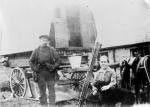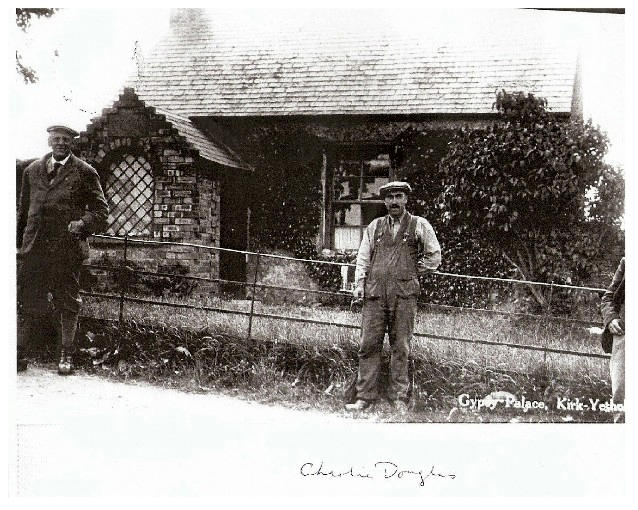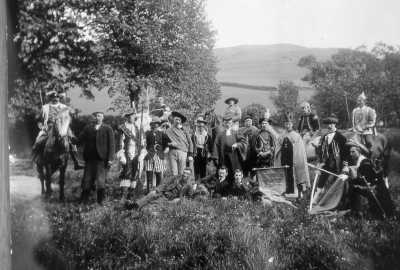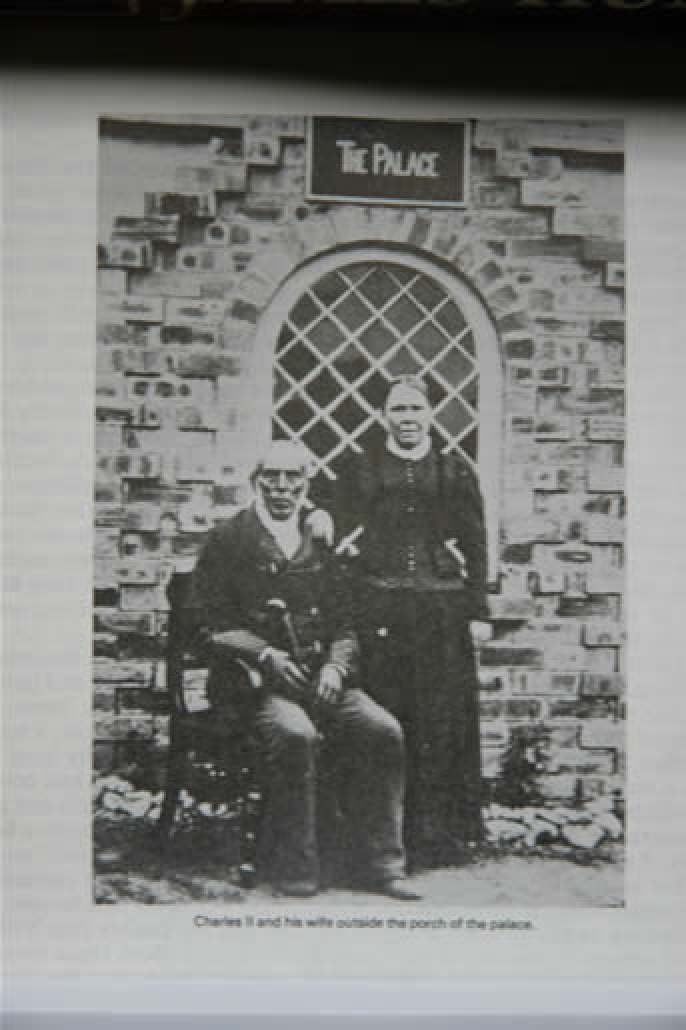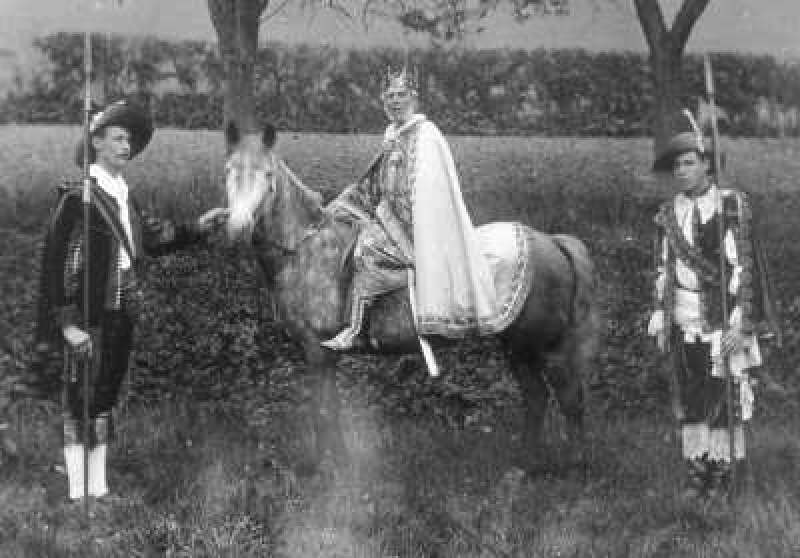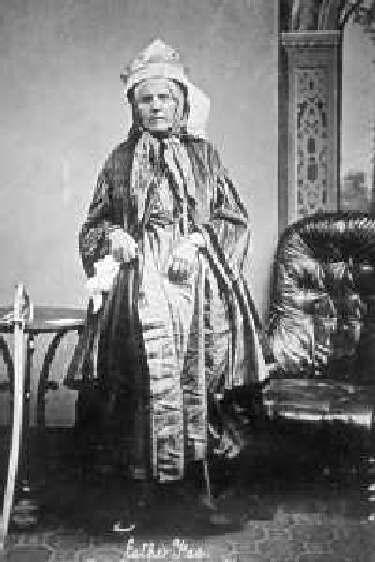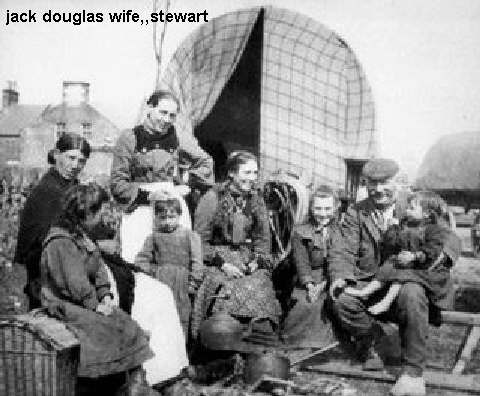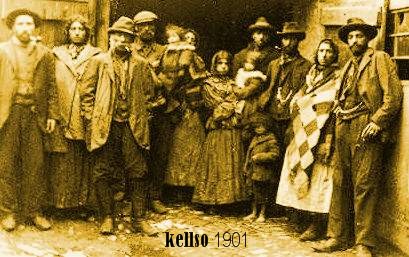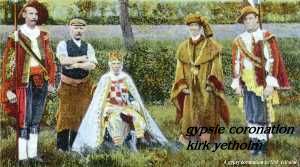
the douglas side of my family originated from the kirk yetholm area,
see charlie douglas recordings yetholm 1958 at foot of the page
PICTURES AT BOTTOM
f FROM yetholm on-line
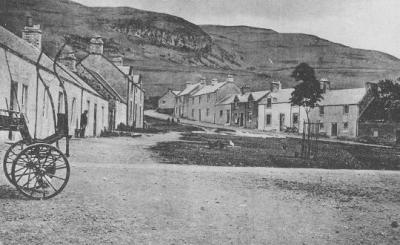
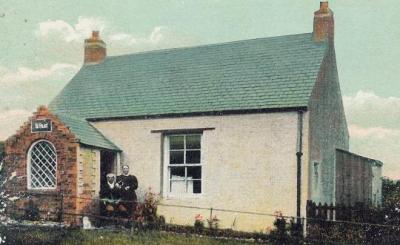
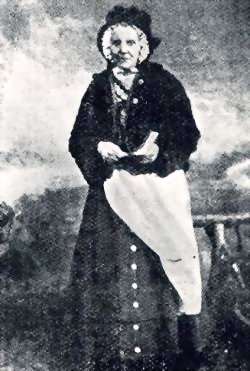
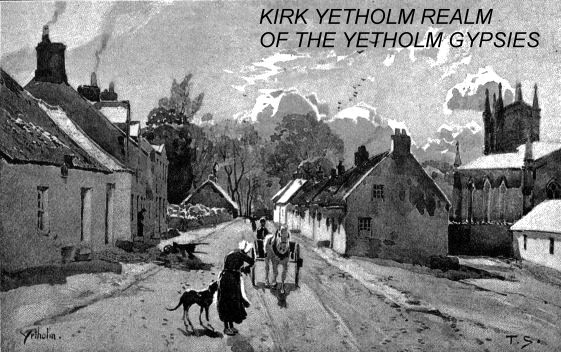
The Yetholm gypsies were, because they were so close to the Border, in a somewhat more fortunate position than those of other more central areas. If under threat, they could vanish over the Border and wait until everything had calmed down before returning. There was an adequate food supply in the Cheviots from the herds of deer and the other animals which roamed the hills. They could move freely from east to west along the Border to reappear at some other spot. Although they were frequently in the Yetholm area, they do not appear to have set up any permanent homes until late on, and certainly into the eighteenth century.
There was however an inbuilt rivalry between the various groups in the border area, and there are recorded a great many violent incidents between the groups. Serious battles were frequent, with many serious and life-threatening injuries resulting, and the trial records show murders to have been almost commonplace, especially between members of the same tribe. Their gatherings at the various fairs which were held throughout the Borders, and no doubt the amount of drink consumed, seem to have led to continuous ongoing friction. Fights at St James Fair at Kelso, at Earlston Fair and at St Boswells Fair are all recorded in the local press of the time.
Despite all the evil-doing detailed above, many, however, saw service in foreign wars and did themselves and their families proud. One such act of bravery is, according to one tradition, the reason for the gypsies arriving in Yetholm.
During war with the French, at the siege of Namur, in 1695, a gypsy of the name of Young, saved the life of a British Officer, Captain David Bennet, who owned property in the Yetholm area. Accordingly, in gratitude for this deed, the Captain built cottages at Yetholm and leased them to the gypsies. At this time, the feu consisted of a cottage, a garden and about a quarter of an acre in the loaning. In addition, there was the right to cut turf and peat, and grazing for a cow and a horse, all on Yetholm Common. This, indeed, was gratitude.
Murray in his 'The Gypsies of the Border', published in 1875, has a different tale to tell, still, however, involving the Bennet family. According to this story, Sir William Bennet of Marlfield had a particularly valuable horse which was 'borrowed' by a group of Jacobites who were passing south along the valley in 1715. Sir William gave the task of recovering his horse to a Faa, who had been following the Jacobites. The successful recovery of his horse led to him giving the Faas permission to settle in Kirk Yetholm.
From one of these happenings, the Yetholm gypsy tradition is supposed to have sprung.
On Bennet's death, in 1755, Nisbet of Dirleton, Bennet's successor, built additional cottages for the gypsies and was so impressed by them that he named them his bodyguard. When the Marquis of Tweeddale acquired the Grubbet estates, he continued to allow them these same privileges of residence. Wauchope of Niddrie, who owned the adjacent barony of Town Yetholm, however, would not allow them even to walk upon his ground. Later, however, the Wauchopes and the gypsies seem to have made good their differences.
.... [cont'd]
In all the records, legal documents, valuation rolls etc, the gypsies are referred to as feuars not as gypsies, thus ranking them equally with the other villagers. They were in fact under even less pressure, in that they were often given extra time by the landowner to pay their dues.
Reading through the Borders Family History Society's 'Roxburghshire Monumental Inscriptions III Yetholm Churchyard', the designation 'feuar' or 'fewer' is used on many of the gravestones, often alongside the occupation.
Rev John Baird, who did so much for the gypsies, as we shall see, writes at length in his entry for the Second Statistical Account of 1841:
Kirk Yetholm has long been known and somewhat celebrated as the residence of the largest colony in Scotland, I believe, of that singular and interesting race of people, the Gipsies, whose origin is involved in so much uncertainty and doubt. I am indeed far from regarding the 'muggers and tinkers' of Kirk Yetholm as the pure unmingled gipsy race, whose forefathers emigrated or were driven into Europe from Hindostan or Egypt. They are much less distinguishable as a peculiar race than they appear to have been formerly. Still their language, their predatory and erratic propensities, and, in general, their dark or dusky complexion, black piercing eyes and Hindoo features, sufficiently betray the original of this despised and neglected race. At what period they first arrived and settled in Kirk Yetholm I have not been able with any accuracy to ascertain. The family of the Faa's seem to have been the first who settled there, and probably about the beginning of last century. Their number in 1797, according to the First Statistical Account was 50. In 1816, according to the late Bailie Smith of Kelso the number was 109. At present there are about 100. Of these, one gipsy female is married to a tradesman in the village; and one woman not belonging to the tribe is married to a gipsy, whom she accompanies in his wanderings.
That the gipsies of Kirk Yetholm have a peculiar language is fully credited by most of the other inhabitants of the village, many of whom have not only heard them converse with each other in this language, but also understand a number of the words. It was my intention to have given a list of such of these words as I have been able to collect; but I shall at present merely mention this general fact regarding them, that, on comparing this list with the specimens furnished by Hoyland from Grellman, I find that the language spoken by the Kirk Yetholm clans corresponds very nearly with that spoken by the English and Turkish gipsies, and that most of these have also been traced to an Indian origin. On this subject, however, they observe a profound secresy (sic).
.... [cont'd]
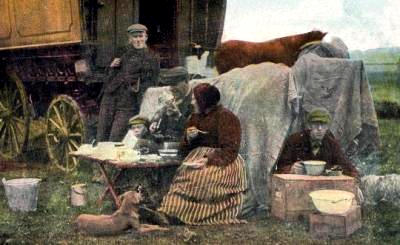
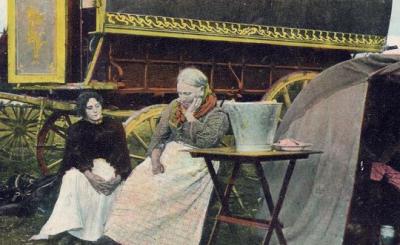
Their occupations are various. There are two who manufacture horn into spoons: one tinker; and most of all of the rest are 'muggers', or, as they prefer being called, 'potters' or 'travellers', who carry earthen-ware about the country for sale. These last also frequently employ themselves in making besoms and baskets. The gipsy, in general, enjoys but few of the comforts of home - with the exception of the spoon-manufacturer, who must remain stationary to fabricate his wares, which the females usually dispose of at neighbouring markets, and in the surrounding country. The horn-spoons, or 'cutties', are very generally used by the peasantry, and before harvest are purchased for the use of the reapers. Most readers are probably familiar with the appearance of a gipsy tent. It is generally situated in the least frequented parts of the country, probably beside some plantation, which supplies it at once with shelter and with fuel. The women carry about their manufactured items for sale; while the men either remain with the cart, or occupy themselves in fishing and poaching, in both of which they are generally expert. The children accompany the females, or collect decayed wood for fuel. At night the whole family sleep under the tent, the covering of which is generally woollen cloth, and is the same usually that covers their cart during the day. Occasionally two or more families travel together. A dog, chained under the cart, protects their property, and at night gives warning of danger. Each family generally travels a particular district, seldom remaining more than a few days in one place. This is their mode of life, even in the coldest and wettest weather of spring, or the beginning of winter; and sometimes the tents are but scantily provided with warm and comfortable clothing. The ground, from which, while they sleep, they are separated only by a blanket or slight mattress laid on some straw, must frequently. of course, be completely saturated with rain; nevertheless I have never understood that these people are, even as much as others, troubled with colds and rheumatisms, to which this mode of life seems almost unavoidably to expose them. Indeed, both at home and abroad, they enjoy the best health. In cases of sickness, they are usually unwilling to call in a medical practitioner. Before autumn all return who are able and willing to hire themselves as reapers. After harvest work is over, they set off once more to the country, where they continue until the severity of winter drives them home. At home they are usually quiet and peaceable. Their quarrels, which do not often take place, and are only among themselves, are very violent while they continue: and the subject or ground of quarrel is seldom known but to themselves. On these occasions they are much addicted to profane swearing, and but too much so at other times. I think it deserving of remark, that most of the murders for which gipsies have been condemned seem to have been committed upon persons of their own tribe, in the heat and violence of passion, the consequence of some old family fead, or upon strangers of other clans for invading what they regard as their territory, or the district they were wont to travel. Their character for truth and honesty is certainly not high. Their pilfering and plundering habits, practised chiefly when from home, are pretty generally known. Their money debts, however, they discharge, I believe, as punctually as others; and there is a species of honour among them, that, if trusted, they will not deceive, and a principle of gratitude, that, if treated kindly, they will not injure. Numerous instances can be referred to of the grateful sense they entertain of favours bestowed on them, and on the length of time they will remember a kindness done either to themselves or their relatives. A deep spirit of revenge is the darkest trait in their character. Yet may most of the savage features of the gipsy character be referred to their loose, wandering, and disorderly life; to their lamentable ignorance of the duties which they owe both to God and man, and their total want of restraint by any consideration, moral or religious. I am not aware that they are much addicted to ardent spirits, or that there is any habitual drunkard belonging to their tribe.
.... [cont'd]
Most of the tribe are able to read, though very indifferently. They seem alive to the advantages of education, and speak of it as the only legacy which a poor man can leave to his children; but the migratory habits of the people prevent their children from remaining long enough at school ever to make much progress. The children are generally remarked as clever. One large family of children have been taught to read by their mother at home; and I have known a father (when he was able) who gave a lesson every day to his two children, in the course of their migrations. I may mention, as a proof of the anxiety of parents on this subject, that most of them have again and again professed their willingness to leave their children at home throughout the year for instruction, could they only afford it, and entrust them to the charge of some prudent person. This is a great step to their improvement, considering how extremely attached the gipsy parent generally is to his children; - that attachment to their offspring being one of those traits or features of character which distinguishes the tribe wherever they are found. Most of the younger children have attended the Sabbath school, when at home; and not only do the parents willingly send them, but even the children themselves seem delighted to attend. I have remarked in most of these children, what may account in some degree for this desire on their parts, a spirit of emulation, and strong desire to please those who will take the trouble to notice them. Even a few of the adults have attended the Sabbath school; but many are kept back by the shame of appearing more deficient than others of their own age.
A great majority of the children have been baptized; and there are probably not so many illegitimate children among them as among the lower ranks of society in general. They almost always intermarry in their own tribe, and are generally dissatisfied when this is not the case.
Of late, the greater number of the tribe have attended church occasionally, and some with exemplary regularity. Their ideas on the subject of religion, however, are extremely limited, and erroneous. Nor can they well be otherwise, considering their unsettled way of life, and their defective education. Yet they profess a general respect for religion; and, when absent from church, excuse themselves on the ground that they have no suitable or decent clothing.
I have not been able to ascertain whether they entertain any peculiar sentiments on the subject of religion. Like most ignorant persons, they are very superstitious. All of them profess to belong to the Established church; there are no Dissenters among them. Eight or nine of them are communicants. Most of them possess Bibles, which have been purchased, however, rather for the use of their children, when at school, than for any other purpose. Those who have not Bibles, would purchase them, they say, could they afford it. Most of them are indeed very poor, if we may judge from their apparel and their household accommodations, all of which are inferior to those possessed by the common class of labourers in the country.
. [cont'd]
It is a fact not very creditable to the wisdom of Britain, that, while so much has been done for the heathen, no attempt has yet been made in Scotland, to civilize and enlighten those wandering tribes, who during three-fourths of the year, in pursuing the avocations, from which they derive their subsistence, have no pastor, no church, no school, no home, and are deprived of the means and opportunities of acquiring every kind of instruction. The attempt, if properly made, would, I am persuaded, be in numerous instances successful. Society would be the principal gainers by the success of any such scheme. They would render their own homes, persons, and property more secure; while they would discharge a long-neglected duty to a considerable number of their fellow creatures and fellow subjects, and rescue an interesting race from infamy, ignorance, and vice.'
The Rev Mr Baird adds in a footnote that by the time this appeared in print, he had received a grant of Bibles and Testaments from the Edinburgh Bible Society which meant that every poor gipsy family was now supplied with a copy of the scriptures.
His thinking was so far advanced, that now, 160 years later, society has still not taken what he had to say to heart and made serious attempts to do something about improving the lot of the wandering gipsy and his family.
If we remember that Jeffrey probably had access to Baird's account, his view of the gipsies of Yetholm is somewhat at variance with that of the Yetholm minister.
Jeffrey states:
'Kirk Yetholm has long been the abode of several gipsy tribes. Various opinions are entertained as to the origin of this race of people, who were once so formidable, and infested most countries of Europe and Asia. The exact year that the gipsies made their appearance is not precisely known. In Turkey they were seen about the beginning of the 15th century, and so formidable were they, that the Turks were glad to enter into a treaty with them, and admit them to the same privileges which the subjects of the Sultan enjoyed. They, however, having been so long accustomed to a vagabond rapacious life, and being unacquainted with the arts of industry, began to have recourse to their former mode of existence.'
From this we can gather that at the time he was writing, gypsies were not the most popular of people. Jeffrey implies idleness and dishonesty and his use of the word 'infested' shows that they were, in his opinion, and doubtless that of others, unwanted and a plague on the society of the time.
Specifically, he says
'that the chief employment of the gypsies was travelling in the summer in promiscuous bands. They generally left their settlement at Kirk Yetholm at the end of March, and did not return until driven back by the storms of winter. Most of the men assisted in the operations of the harvest, and in the winter carted coals to Jedburgh.'
During their progress through the countryside, Jeffrey says that
'they laid the farm-yards, corn and potato fields under contribution to a great extent. They had the perfect knack of thieving and carried off everything that came in their way - corn, hay, hewn stones, wheels and axletree.'
He adds that
'A few of the gypsies still travel the country, dealing in earthenware, horn spoons, baskets, heather brooms, and mats; but the strictness with which they are watched by the police prevents any exercise of their thieving talents. From the improved state of the district, there are few waste places for them to pitch their camp, and the raising of a fire on the roadside is certain to be visited with a fine and imprisonment. They cannot now remain in idleness, and are forced to apply themselves to some occupation to procure daily bread.'
Since he wrote, attitudes have, thankfully, changed somewhat, so that it is possible to gather facts about them rather than subjective opinion.
Like most rogues, however, their relationship with their immediate neighbours was better than that with the community at large. Most of those settled at Yetholm got on reasonably well with their neighbours. Disputes tended to be minor, and often over straying animals. Real quarrels tended to be within the tribe, or with members of other tribes when large groups gathered for the annual fairs and get-togethers, and when drink tended to flow more freely.
However, it has been said that, a gypsy would never do harm to those who trusted or showed a kindness to them. One Jedburgh lawyer is reported as having gone so far as to state that he would rather trust a gypsy before ten ordinary people. I don't know whether this tells us more about the gypsy or the Jethart people of the time.
Poverty was rife amongst the gypsies, particularly in the winter time, when they were back at Yetholm. There was little food to be had apart from what they could get by begging or grow, which in itself was difficult when away from March until Autumn, and luxuries were unheard of. Most of their property went with them on their travels, so what they had was limited by what they could carry, and little would be left at Yetholm during the summer. Thus their homes were rough and ready with little of what we would nowadays think of as furniture.
'It may not be improper to add here that the county is often infested with gangs of tinkers and horners from the neighbourhood of Berwick, and sometimes from the shires of Ayr, Renfrew and Lanark. They travel with their wives and chidren on asses, mules, or ponies loaded with their wares and tools; and though they disdain the name of beggars, are a sore burden on the farmers for lodging and provisions to themselves and cattle. At the time of sheep-shearing, too, sturdy women, chiefly from Edinburgh and Dalkeith, provincially called Randies, traverse the pasture district, under pretence of gathering or asking locks of wool, and are suspected of taking more than is given to them. Some of both classes are so mischievous, as to assault those who are weaker or more timid than themselves, to break the windows, and in other respects to demolish the property of such as refuse their demands.'
'Quacks, jugglers, and strolling players not infrequently pick the pockets of the industrious.'
The Ettrick Shepherd, James Hogg, is reported as remarking to the effect that the first sign of Spring was the arrival of the gypsies up the Ettrick Valley and the simultaneous disappearance of the local livestock and game. Each group or tribe had its own very clearly defined areas within which it felt it had the sole right to carry out its business, whatever that might be. Straying into another tribe's area usually resulted in fights. Battles are recorded in which people were involved in causing major injuries to others, even on occasion death. The 'Battle of Hawick Brig' on 1772, and another at Hawick in 1730, both between the Yetholm group and one from Lochmaben, and a major one at Romanno in 1667 leading to killings and subsequent executions for murder.
Jeffrey also raises the subject of the dilution of the gypsy race by intermarriage.
'A number of the men have become labourers, and, mixing in the population, acquire better habits, and marry out of their tribe. The gipsy girls, too, are beginning to leave their tribe, and to engage as domestic servants and bondagers, and occasionally marry farm servants... There can be little doubt that the original race is fast falling off, and that ere many years run their course, the oriental blood will have ceased to flow. The days of the gipsy have passed away.'
Whilst this may be true in essence, most married within the tribe, with the others tending, in the main, to marry members of another tribe or family. The men would also marry non-gypsies, and bring them back into the group. Marrying within too close a genetic grouping tends to lead to in-breeding, but there would not seem to be any evidence of that, or at least no more than within any small community in the earlier times, when the nuclear family was much bigger and stationary.
Early marriage seemed to be the norm among the gypsies. It has been said that there were very few illegitimate births, as most of the girls were married before their teens were over. Divorce was not common, but when it happened, it was accepted that the man could remarry, but that the woman could not. The customs of divorce seem to have been based, to some extent on the middle-eastern custom of repeating 'I divorce thee' three times , but in the case of the gypsies, a pre-requisite was the killing of a horse or foal. As good horses were hard to come by, and therefore expensive, divorce could not be taken lightly.
The ritual burning of the property of a dead gypsy was carried on for many years, but eventually stopped, as the belief that it speeded the departed's journey to heaven died out. The wakes or send-offs for the dead were great feastings, with huge amounts of food and drink consumed.
click on a picture
click here charlie douglas recordings